
Centralisation of Service Requests and Decision Workflow as a Foundation for Risk Control in Water and Wastewater Utilities
AI and automation FinTech Consulting
More about case study Centralisation of Service Requests and Decision Workflow as a Foundation for Risk Control in Water and Wastewater Utilities
This case study presents a project aimed at structuring the service request process in a water and wastewater infrastructure company. The objective was to move from a fragmented, reactive approach to service management towards a coherent decision framework enabling effective control of contractual, financial and reputational risk. The project demonstrated that the primary limitation in water and wastewater utilities is not a lack of IT tools or human resources, but the absence of structured information and contract-level visibility.
Client
The client is a company delivering long-term water and wastewater infrastructure contracts, covering the design, construction and maintenance of technical installations. The organisation was responsible for servicing multiple infrastructure assets, each governed by different warranty conditions and contractual obligations.
While the company had strong technical and operational expertise, the growing number of active contracts made it increasingly difficult to maintain control over service request statuses, response times and contractual responsibility. Management was seeking a way to translate day-to-day operational events into a clear, decision-ready view of risk and priorities.
Client challenges
The core challenge was not a lack of data, but its fragmentation and the absence of a clear decision structure. Service requests were received through multiple channels, including email, phone calls and direct communication with service teams. Their further handling depended heavily on individual experience and informal arrangements.
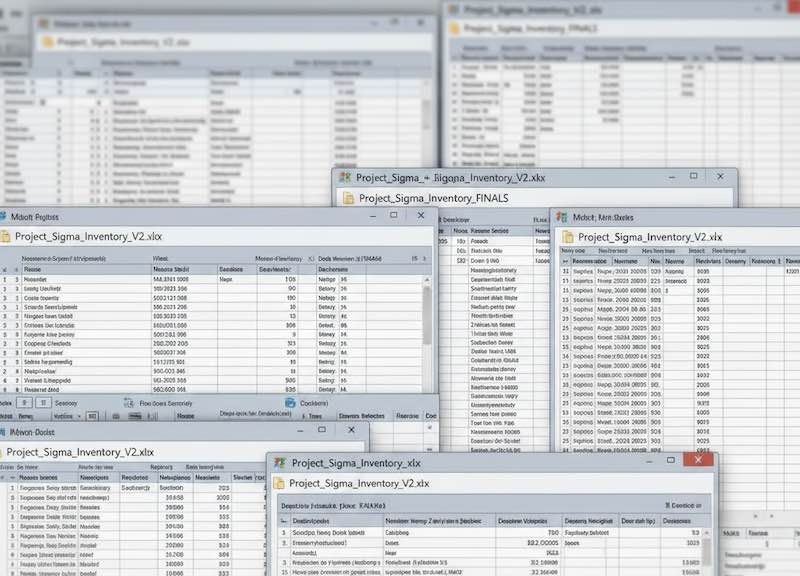
A complete view of the service situation existed only informally, mainly in Excel spreadsheets and in the knowledge of specific individuals. There was no single place where management could quickly assess which requests were critical, what the contractual implications were, and where warranty-related risk was accumulating. The lack of direct links between requests, contracts and warranty terms significantly limited informed decision-making.
Our solution
The project followed an iterative approach, starting with a Proof of Concept executed in real operational conditions. The purpose of the PoC was not to deploy a full system, but to reflect the actual service workflow and verify whether centralising service requests with contract context would improve risk control.
The first step involved analysing service handling practices and contractual and warranty conditions. Based on this analysis, an information structure was designed in which each service request was directly linked to a specific contract, deadlines and responsibility. Requests were no longer treated as isolated incidents but as part of a broader decision context.
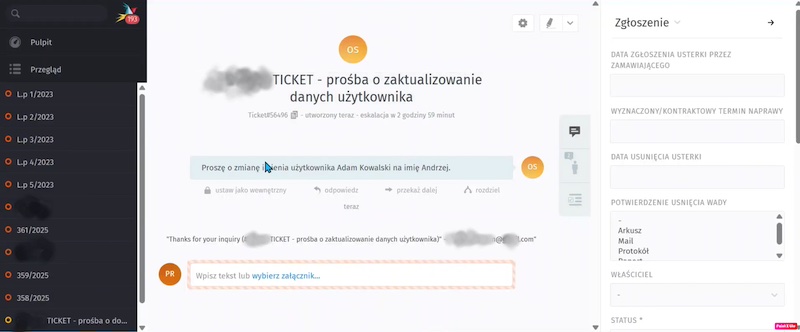
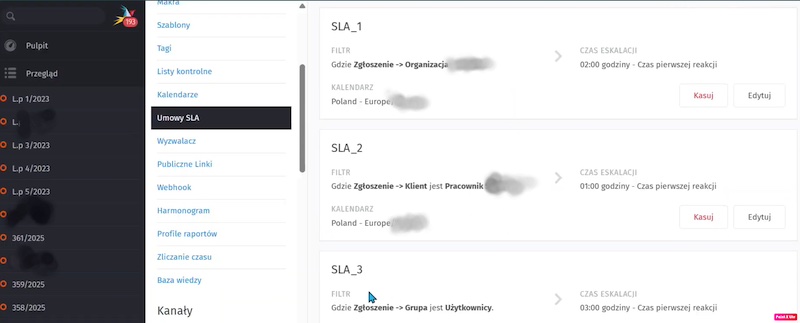
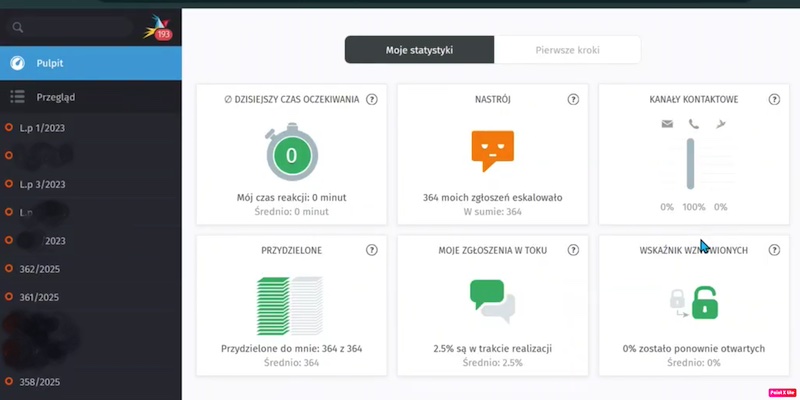
A central service register was designed to support daily operational work while simultaneously providing management with a concise, risk-focused view, without requiring analysis of detailed technical data. The system did not automate decisions, but highlighted areas requiring attention and potential escalation points.
Challenge
- Data fragmentation
- Ticket handling was heavily dependent on individual arrangements
- The overall service status existed only informally, mainly in Excel spreadsheets
Solution
- A phased approach, with Proof of Concept as the first step
- Designing the information structure
- A central ticket registry
Results
The implemented approach delivered measurable operational and management-level results. The average time required to determine the full status of a service request, including its history and contractual context, was reduced by 55–65%, enabling faster and more informed responses.
Time to first response for high-priority requests was reduced by 30–40%, significantly limiting escalation and lowering the risk of breaching warranty obligations. Manual effort related to information consolidation and reporting was reduced by 40–50%, allowing teams to focus on higher-value activities.
From a management perspective, the key outcome was improved visibility of contractual risk. Aggregating service requests at the contract level enabled earlier corrective actions and an estimated service cost reduction of 15–20% annually. For full deployment, the projected return on investment was estimated at 170–200% over 18–24 months.
The project confirmed that effective operational risk control in water and wastewater utilities starts with structured information, not with technology alone.